Why Is the Festival Moving After All These Years?
For most of its three-and-a-half decades, the Denton Arts & Jazz Festival has shaped how this city understands itself in the fall — a free, open-air gathering where visual art, live music, and community overlap without a ticket gate in sight. The 35th anniversary edition, held September 11–13, 2026, carried that tradition forward while doing something its recent predecessors had not: it moved.
The festival relocated to the North Texas Fairgrounds at 2217 N. Carroll Blvd., a site that organizers and local observers recognize as a return to the event’s original home. That framing matters. This was not a retreat or a compromise forced by circumstance. It was a deliberate repositioning of a maturing civic institution back onto ground it had occupied before — ground that, this time around, offers considerably more room to operate.
Understanding why that distinction carries weight requires a look at what the fairgrounds actually provide, and what the festival has quietly been running up against in recent years.
What Does the North Texas Fairgrounds Offer That Previous Venues Did Not?
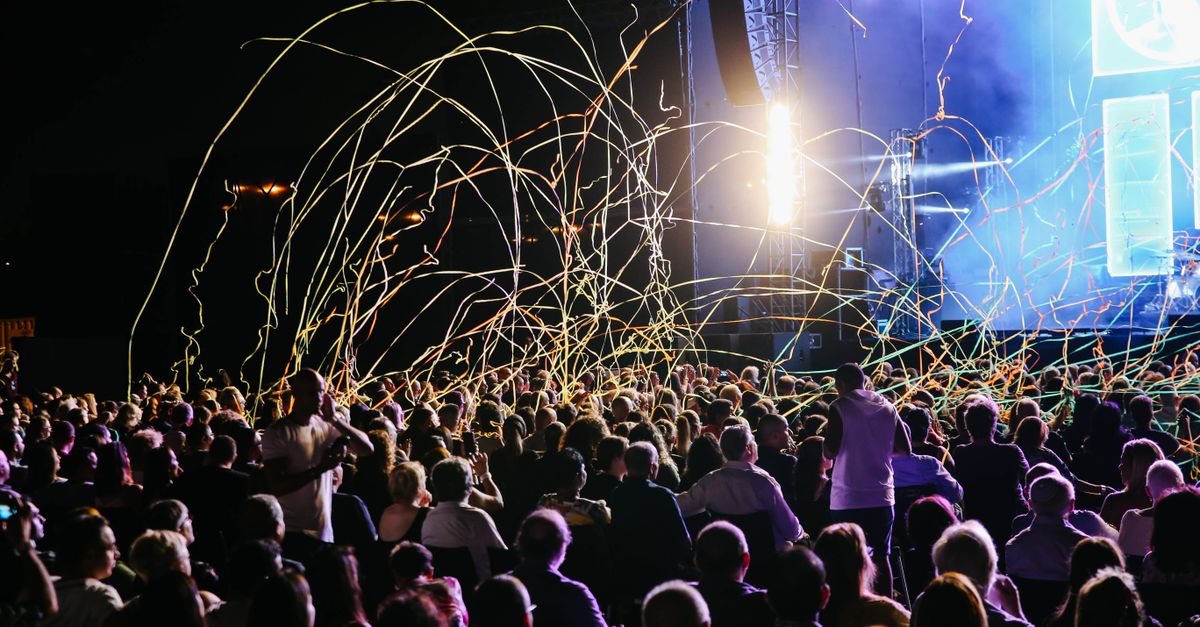
The most immediate answer is scale. The North Texas Fairgrounds property is a large, established event campus, and that size translates directly into the festival’s ability to accommodate more attendees without the friction that comes when a popular free event outgrows its footprint.
Expanded capacity is the headline, but the fairgrounds bring practical improvements alongside it. Organizers have pointed to upgraded amenities and improved accessibility as concrete gains from the venue change. For an event that positions itself as inclusive and community-wide, accessibility is not a secondary consideration. It affects who can realistically attend, how long they can stay, and whether the experience holds together for families with strollers, older residents, and visitors with mobility needs.
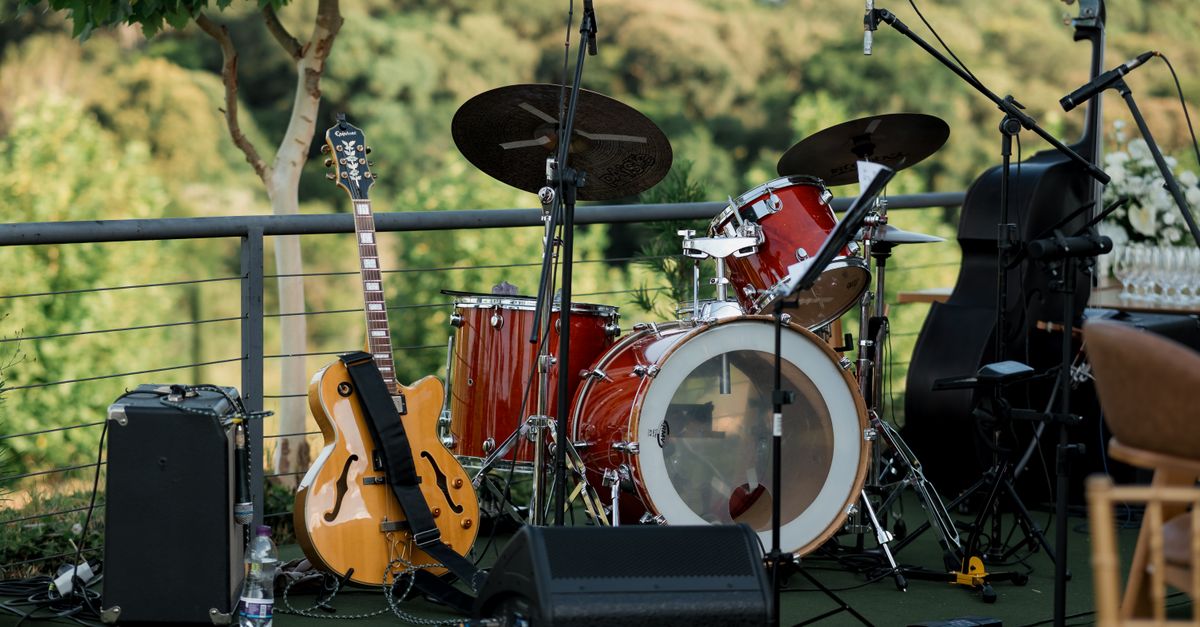
The infrastructure work was already visible before the festival opened. Some stages had been constructed at the Carroll Boulevard site in the lead-up to the event, a sign that the transition involved real logistical investment rather than a last-minute shuffle. Staging at an outdoor music festival is not incidental — it determines sightlines, sound distribution, crowd flow, and the overall rhythm of the day across multiple performance areas.
How Does This Fit Into What the Festival Has Always Been?
The Denton Arts & Jazz Festival has maintained free admission throughout its run, and that remained true for the 35th edition. That is not a trivial commitment for an event of this scale. Sustaining a multi-day outdoor festival — with live music across multiple stages, art installations and vendors, and the logistical demands of a large public gathering — without passing costs to attendees reflects a specific set of values about who the event is for.
In practice, it means the festival functions as common ground in a way that ticketed events structurally cannot. A Denton family that cannot absorb festival admission costs participates on the same terms as anyone else. That dynamic has been part of the event’s identity since long before its 35th year, and the venue change was explicitly framed as preserving rather than disrupting it.
The programming spread across the three days reflected that breadth-over-exclusivity philosophy. Friday ran from 3 p.m. to 11 p.m., Saturday from 10 a.m. to 11 p.m., and Sunday from 11 a.m. to 9 p.m. — a schedule designed to accommodate different schedules and different kinds of attendees rather than concentrating the experience into a single peak window.
What Does a 35th Anniversary Actually Represent for a City Like Denton?
Denton is a city with two major universities, a downtown music scene that punches well above the city’s population weight, and a civic culture that has historically taken arts programming seriously as infrastructure rather than amenity. Against that backdrop, a festival reaching its 35th iteration is worth examining as an institutional fact, not just an annual calendar entry.
Thirty-five years of continuous operation means the Arts & Jazz Festival has outlasted economic downturns, changes in city leadership, shifts in the broader music industry, and the particular disruptions of the early 2020s. Events that survive that kind of timeline do so because they have built genuine community investment — not just attendance numbers, but the kind of recurring participation that makes the event part of how residents mark the passage of time in a place.
The return to the North Texas Fairgrounds adds a layer of historical texture to that arc. When an institution circles back to its origins at a milestone anniversary, it creates a narrative coherence that a simple continuation would not. The 35th festival was not just another year; it was a deliberate accounting of where the event came from and what it had become large enough to require.
What Should Residents Take Away From the Venue Transition?
The move to 2217 N. Carroll Blvd. is best understood as a structural upgrade timed to coincide with a milestone that invited reassessment anyway. The festival did not change what it is — free, multi-day, rooted in live music and visual art, oriented toward the whole community rather than a demographic slice of it. It changed where it is, and in doing so gained the physical capacity to be more of what it already was.
For longtime attendees, the fairgrounds location may carry its own set of memories from earlier editions, which gives the return a resonance that a move to a neutral new site would lack. For newer residents and students encountering the festival for the first time, the venue presents a more spacious and accessible version of an event that the city has been building for three and a half decades.
Denton runs a crowded fall calendar — the Blues Festival at Quakertown Park, the month-long Halloween programming through October, the weekly Denton Community Market downtown on Saturdays — and the Arts & Jazz Festival occupies a particular position within that sequence. It is the event that most explicitly frames Denton’s identity as an arts city, and at 35 years, it has earned the infrastructure to make that claim with room to spare.