What Actually Happens Over Those Three Days
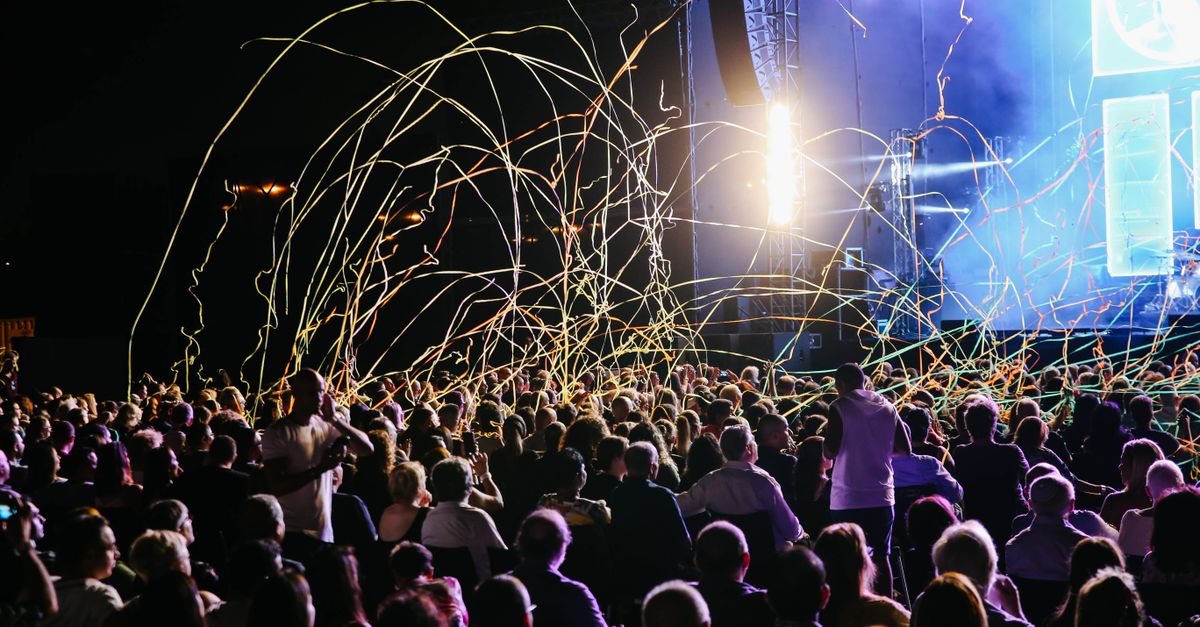
From the outside, the Denton Arts & Jazz Festival can sound like a simple headline: free music, downtown energy, a good weekend. But the logistics behind a three-day event that places 3,000 artists across six stages at the North Texas Fairgrounds on Carroll Boulevard reveal something more deliberate — a community infrastructure project dressed up as a party.
Running September 11 through 13, 2026, the festival draws on a format that has proven durable in a city that takes its arts ecosystem seriously. Denton is home to the University of North Texas College of Music, a downtown Square that sustains live venues year-round, and a resident population with an unusually high tolerance for genre-crossing. Those conditions don’t produce a festival like this automatically, but they do explain why the model holds.
The event is free to attend. That single fact shapes everything about how it functions as a community gathering rather than a ticketed cultural product.
Why Free Admission Changes the Crowd
Festivals that charge admission self-select their audiences. A family in Denton weighing a $15-per-head entry fee against a Saturday of other options makes a different calculation than one that can simply show up at the North Texas Fairgrounds and leave whenever the kids hit their limit. The no-cost structure at the Arts & Jazz Festival means the crowd on any given afternoon is genuinely mixed — age groups, neighborhoods, levels of prior jazz knowledge.
That mix has practical consequences for what gets programmed. With six stages running simultaneously, organizers can slot children’s activities and family-oriented programming without pulling those audiences away from the main musical draw. Dance performances, arts and crafts vendors, and food and drink offerings fill out the fairgrounds in ways that let different groups occupy the same space without competing for the same square footage.
The 3,000-artist figure is worth pausing on. It is not a typo or a round-number approximation. Distributing that many participants across six stages over three days requires a scheduling architecture that keeps the event from feeling either overcrowded or underattended at any given moment. For a free festival, managing flow without ticket-based crowd control is a genuine operational challenge.
How the North Texas Fairgrounds Shape the Experience
The venue address — 2217 N. Carroll Blvd. — places the festival north of the downtown Square, which matters for how Denton residents orient themselves to it. The North Texas Fairgrounds is large enough to accommodate the scale of the event without forcing attendees into a single bottleneck, and its layout allows for the kind of spatial separation that makes six simultaneous stages practical rather than acoustically chaotic.
Carroll Boulevard itself is a corridor that connects the fairgrounds to residential Denton in ways that make the walk or short drive feel like part of the city rather than a trip to an isolated venue. That geographic integration is part of what keeps the festival anchored in the community rather than floating above it as a destination event that happens to be located here.
For Denton residents who have attended in previous years, the fairgrounds site is familiar enough that the logistics of parking, entry, and navigation don’t consume the first hour. For visitors coming in from the broader North Texas region, the location is accessible off major corridors without requiring the kind of downtown navigation that can frustrate first-time visitors to events on the Square.
What Six Stages Actually Means for Musical Range
Jazz is in the name, but the festival’s programming has always reflected the breadth of what Denton’s music community actually produces. A city with UNT’s jazz studies program as an anchor institution generates performers who move fluidly between traditional jazz vocabularies, fusion, blues-adjacent territory, and contemporary forms that resist easy categorization.
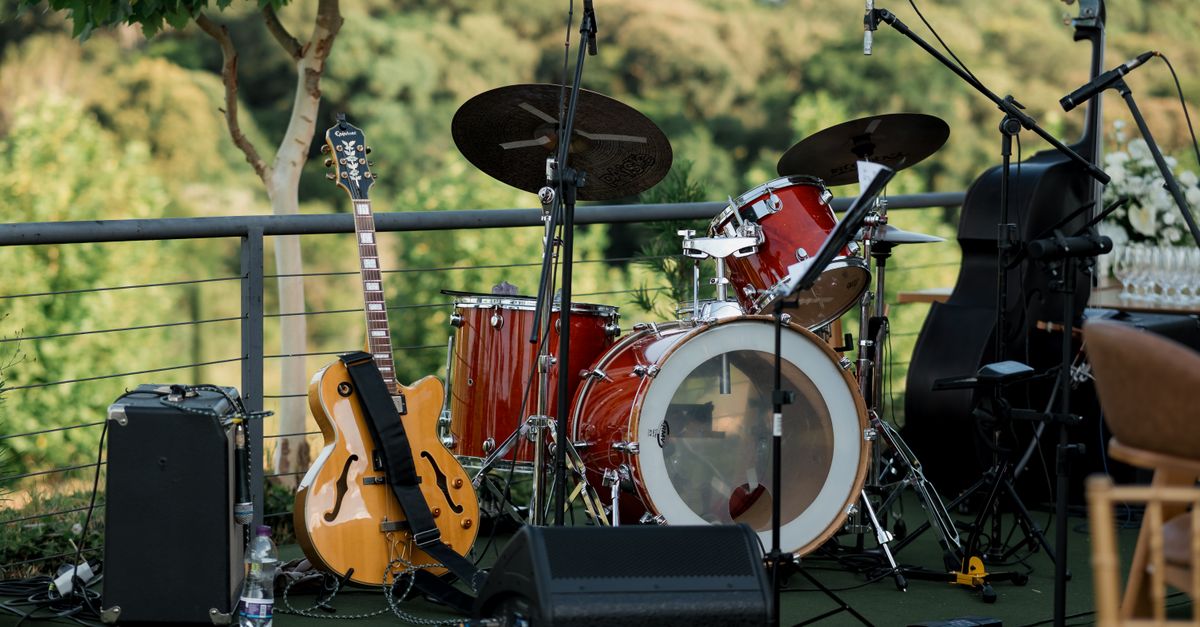
Six stages running concurrently means that at any point on Friday evening, Saturday afternoon, or Sunday, an attendee can choose between meaningfully different sonic environments. That’s not a trivial thing. Single-stage festivals create a shared experience but also a single bottleneck — if the act on stage isn’t connecting with you, there’s nowhere to go. A six-stage layout gives the festival the texture of a city rather than an auditorium.
Dance programming adds another dimension. Performances that incorporate movement situate jazz not as a listening-only tradition but as music with a physical history and a living relationship to the body. For younger attendees encountering this material for the first time, that embodied context is often more accessible than a purely auditory introduction.
How This Fits Into Denton’s Broader September
The timing of the Arts & Jazz Festival — opening September 11 — places it at the front of what is, by any measure, a dense stretch of community programming in Denton. The following weekend brings the 33rd Annual Dog Days of Denton at the Civic Center Pool, a dog-friendly event whose proceeds benefit the Lily Cantu Inclusive Playground at North Lakes Park. The Denton Community Market continues its weekly presence on the downtown Square through the month. The Denton Blues Festival, organized by the Denton Black Chamber of Commerce at Quakertown Park, represents another September tradition running concurrently.
For a city of Denton’s size, that concentration of free and low-cost public programming in a single month reflects something about local organizational capacity — the volunteer networks, nonprofit structures, and city partnerships that make it possible to sustain multiple large events without one cannibalizing another’s audience.
The Arts & Jazz Festival, by virtue of its scale and its opening-weekend position, functions as a kind of seasonal signal. When the fairgrounds lights up on the evening of September 11, it marks the point at which Denton shifts from summer mode into what is, for this community, a genuinely busy civic autumn.
What Draws People Back Year After Year
Repeat attendance at free festivals is never guaranteed. Without a ticket purchase creating commitment, the barrier to staying home is low. The fact that the Arts & Jazz Festival sustains its scale and audience over multiple decades suggests that the experience delivers something worth returning for — not just the music, but the particular feeling of being in a Denton crowd that has shown up for something collectively.
That’s harder to manufacture than a lineup or a stage count. It emerges from years of the event being reliably present, reliably free, and reliably large enough that the fairgrounds feels genuinely alive rather than half-empty. For a community that takes some pride in its independent cultural identity relative to the larger Dallas-Fort Worth metro, the Arts & Jazz Festival is one of the cleaner expressions of what that identity actually looks like in practice.
The gates open September 11. The admission price remains what it has been.